

To pay attention in church, change the conditions rather than relying on willpower: sleep your usual hours on Saturday, read the sermon passage before you arrive, sit where you can see the speaker, and give your hands something to do by taking short notes. Most people who drift off or zone out during the sermon aren't uninterested. They're tired, still and warm, which is the combination the body reads as time to rest.
If you've ever jerked awake halfway through the second point, or realised you've spent ten minutes planning lunch, you're in very old company. This guide covers why it happens, ten fixes that actually work, and extra help for anyone who finds focus hard in general, including people with ADHD.
You're not the first
The Bible records one of the most famous naps in church history. Paul was preaching in Troas, and the meeting ran late:
And there sat in a window a certain young man named Eutychus, being fallen into a deep sleep: and as Paul was long preaching, he sunk down with sleep, and fell down from the third loft, and was taken up dead. Acts 20:9 (KJV)
Paul went down, embraced him and said his life was in him, and the young man was brought back alive. What the passage doesn't include is a lecture about sleeping in church. Paul had been talking until midnight in a crowded upstairs room, and Luke tells it plainly.
Tiredness isn't a verdict on your faith. It's still worth fixing, because the sermon is one of the few times in a week when someone opens Scripture with you for half an hour. Jesus put it this way about His own disciples, asleep when they meant to keep watch: "the spirit indeed is willing, but the flesh is weak" (Matthew 26:41, KJV). The fixes below are about helping the flesh keep up.
Why your attention drifts in church
It helps to know what you're up against. Several things stack up on a typical Sunday:
- A short night. Saturday is the night most of us stay up later, then set an alarm earlier than on a workday to get the family out of the door.
- Sitting still. After worship and standing, you settle into a padded seat for 30 to 45 minutes. Stillness lowers your alertness.
- Warmth and low light. A full room warms up quickly, and many sanctuaries dim the lights for the sermon.
- One steady voice. Even a great preacher speaks at a fairly even pace, and listening without doing anything is the hardest form of attention.
- A phone in your pocket. One buzz, and your mind is out of the room even if your eyes aren't.
- Afternoon and evening services. If your service is after lunch, you're sitting through the natural early-afternoon dip in alertness.
None of these are about how much you care. That's good news, because every one of them can be changed.
10 ways to stay awake and focused during the sermon
1. Protect Saturday night
The single biggest fix happens the night before. Go to bed at your usual time rather than later, and if you can, lay out clothes and Bibles on Saturday so Sunday morning isn't a sprint. An extra 45 minutes of sleep does more than any trick you can try in the pew.
2. Eat a lighter breakfast and drink water
A big, heavy breakfast right before church makes the body slow down to digest. Something lighter, with protein, keeps you steadier. Drink a glass of water before you leave and bring a bottle if your church allows it, since even mild dehydration makes you feel sluggish. If you drink coffee, have it about half an hour before the service rather than right as the sermon starts.
3. Read the passage before you arrive
Many churches post the sermon series or the Sunday text on their website, app or social media. Read the passage once on Saturday night or in the parking lot. When you already know the story, you're listening for what the pastor will do with it, and that's much more engaging than hearing it cold. If you can't find the text in advance, open to it as soon as it's announced.
4. Sit nearer the front
It's harder to drift when the speaker is right there, and you're not watching the backs of fifty heads or a toddler three rows up. Sitting up straight with both feet on the floor makes a surprising difference too. If you tend to slump, choose a seat without a wall or pillar to lean on.
5. Silence your phone properly
Turn on Do Not Disturb or a Focus mode before the service, not just silent mode. A glance at one notification can take your attention for the next several minutes. If you read your Bible or take notes on your phone, keep that one app open and the rest out of sight.
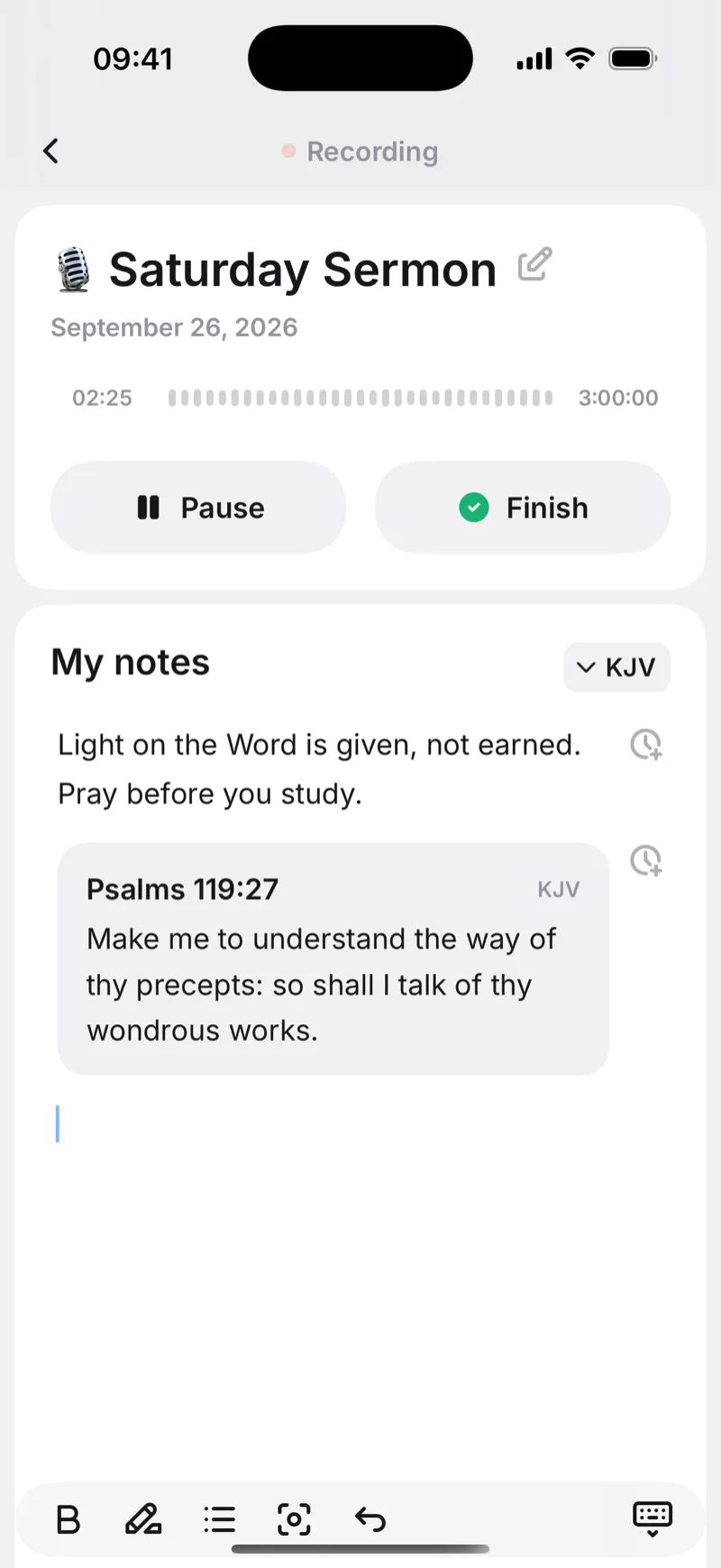
6. Take notes
This is the fix that works for the most people, because it turns listening into something you're doing. You don't need to write much. Listen for three things and jot them down:
- The main point: what is the one thing this sermon is saying?
- The passage: which verses is it built on?
- One thing to do: what could you act on this week?
Writing a word or two every few minutes keeps your mind tethered to the sermon. It also gives you something to come back to on Wednesday. Our guide on how to take notes in church covers five simple methods.
7. Listen for the structure
Most sermons follow a shape: a passage, two or three points, an illustration or two, and a call to respond. Listening for the next point gives your attention a target. When you hear "second," "the next thing" or "so what does this mean for us," that's your cue to write something down.
8. Keep your body gently engaged
Small movements help without disturbing anyone: press your feet into the floor, shift your posture, take a slow deep breath. If you feel yourself going under, stand up quietly at the back or the side for a few minutes. Most pastors would far rather see you standing than sleeping.
9. Pray before it starts
Before the sermon begins, ask God to help you hear. "Take heed therefore how ye hear" is Jesus' own instruction (Luke 8:18, KJV). A ten-second prayer also works as a mental reset: it's the moment you decide that the next half hour is for listening.
10. Record it, so a lapse isn't a loss
Part of what makes attention slip is the fear of missing something, which pulls you into worrying about the last point while the next one goes by. If the sermon is recorded, a lapse is no longer permanent. You can relax into listening and go back to anything you missed. Check first whether your church already posts recordings, and if you record yourself, our guide on whether it's okay to record a sermon covers the etiquette.
How to focus in church with ADHD
If focus is hard for you everywhere, not just in church, the usual advice to "just concentrate" misses the point. A 30-to-45-minute talk with no visuals and no interaction is one of the hardest formats there is for an ADHD brain. A few adjustments help a lot:
- Let your hands move. A silent fidget, a ring you can turn, or doodling in the margins of your notes can make it easier to listen. A small 2009 study found that people who doodled while listening to a dull phone message remembered more of it than those who didn't.
- Take the aisle seat. Knowing you can step out to refill water or stand at the back, and come back without climbing over anyone, lowers the pressure to sit perfectly still.
- Get a map in advance. Reading the passage beforehand, or looking at the sermon outline if your church prints one, gives your attention somewhere to return to when it wanders.
- Write in fragments. Single words and arrows are fine. The goal is to stay engaged, not to produce a transcript.
- Stop fighting to catch everything. Record the sermon so that your mind drifting for two minutes doesn't cost you the whole message. Knowing you can relisten often makes it easier to stay present.
- Revisit it in a different format. Some people take in a sermon better by reading a summary or the transcript afterwards than by listening in the room. That's a perfectly good way to receive it.
This is general guidance, not medical advice. If you're managing ADHD with a doctor, Sunday is worth mentioning, especially if your medication timing means it has worn off or not yet started by the time the sermon begins.
After the service: catch what you missed
Even on your best Sunday, you'll lose parts of the sermon. That's normal. What matters is whether any of it stays with you through the week, and a short revisit makes a big difference:
- Read your notes that afternoon and underline the one thing you want to remember.
- Midweek, spend ten minutes with the main passage. The SOAP method is a simple way to do it.
- Talk about it. Ask someone at lunch, "What stood out to you?" Explaining a point is one of the best ways to keep it.
- Pick one step to act on this week. Our guide on how to apply a sermon shows how to make it specific.
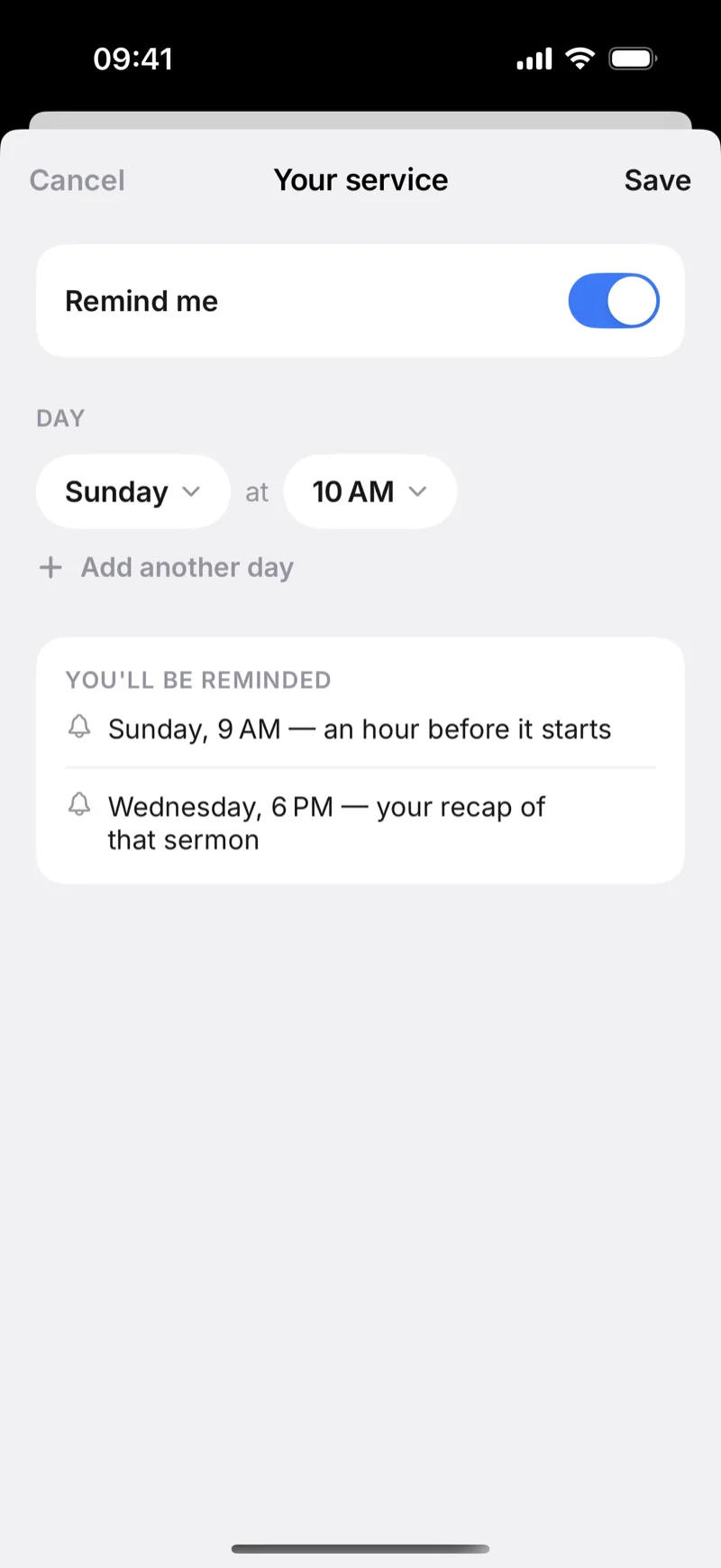
Sermon Keeper was built for exactly this. Tap once to record, type notes as you listen (each one is saved at the moment you wrote it), and after the service you get a transcript and a summary with the outline and the verses. If you set your service time, it also reminds you an hour before church starts and sends you a recap of that sermon a few days later.


Putting it together
Falling asleep or zoning out in church is common, and it's rarely about how much you care. Most of it is fixed before you sit down: a normal night's sleep, a lighter breakfast, the passage read in advance and a seat where you can see. In the service, take a few notes and listen for the structure. Afterwards, come back to the message once during the week.
Start with one change this Sunday, probably notes, and add another next week. For more on making a sermon stay with you, read how to remember sermons better.
Frequently asked questions
Usually it's not the sermon. Sitting still for 30 minutes or more in a warm, quiet room, after a short night's sleep, is exactly what the body treats as a signal to rest. A late Saturday, a heavy breakfast, low lighting and a steady speaking voice all add to it. If you're drowsy everywhere you sit still, not only in church, it's worth mentioning to a doctor.
Falling asleep isn't the same as not caring. In Acts 20, a young man named Eutychus fell asleep during Paul's sermon, which went on until midnight, and the passage records his rescue, not a rebuke. Jesus said of His tired disciples that "the spirit indeed is willing, but the flesh is weak" (Matthew 26:41, KJV). It's worth working on, but it's a matter of habits, not guilt.
Sleep your normal hours on Saturday, eat a lighter breakfast, drink water, sit upright near the front and take notes. Writing a few words every few minutes is one of the most reliable ways to stay alert, because it turns listening into something you do.
Give your attention something to hold: quiet notes or doodles, a silent fidget, and a seat on the aisle where you can step out and back without fuss. Read the passage beforehand so you have a map, and record the sermon so you can relisten to anything you missed instead of worrying about it in the moment.
Many churches are used to it now, especially where the Bible is on a phone too. Put your phone in Do Not Disturb or Focus mode first, so notifications don't pull you away, and keep the screen for the sermon.
Don't write the morning off. Many churches post the sermon online within a day or two, and if you recorded it yourself you can listen again at home. Even ten minutes with the main passage later in the week gets you most of the way back.